You’re ready to tackle that bathroom reno. Good. Here’s the thing. Most people have no idea what they’re getting into cost-wise. They pick out pretty tiles and fancy faucets. Then reality hits. The real cost to renovate a bathroom depends on way more than what you see on Pinterest.
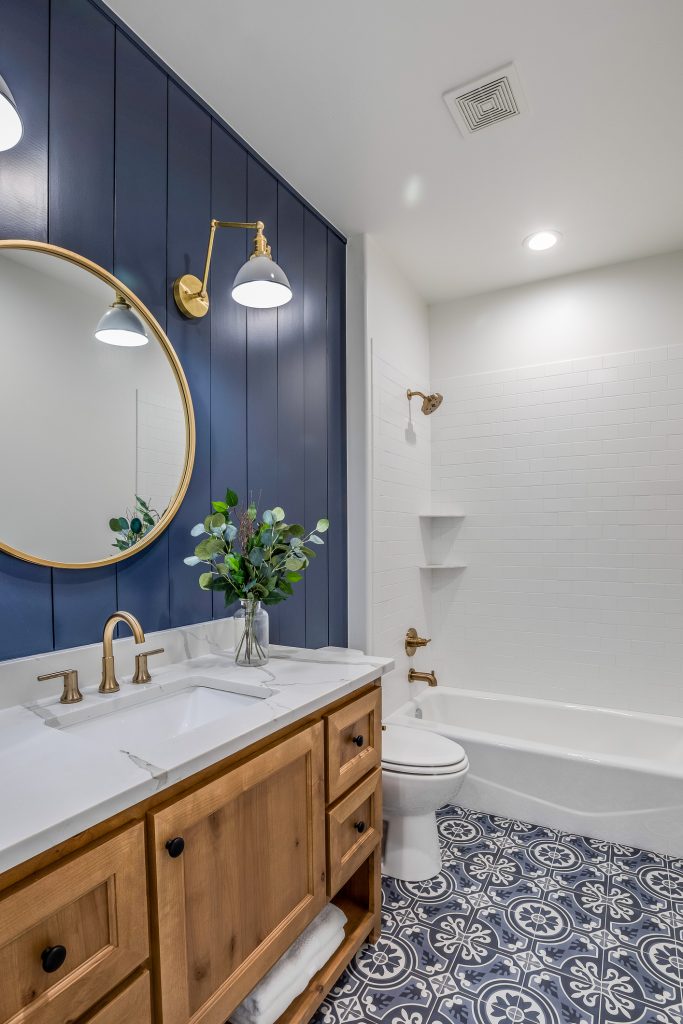
The good news? A well-planned bathroom remodel can return a good portion of your money at resale. But first, let’s figure out what this is actually going to cost you.
How much does a bathroom remodel cost? As a rough benchmark, bathroom remodels run $100 to $300 per square foot for mid-range projects. That number swings based on fixtures, finishes, and whether you’re moving plumbing. A basic refresh sits closer to $75 per square foot. High-end custom work? $400 or more.
Four things determine your final cost. Bathroom size. Material choices. How much work you’re doing. And whether you hire pros or DIY it. These numbers come from real projects in Central Illinois. Here, labor rates, material availability, and weather extremes shape what you’ll actually pay.
This guide breaks down exactly where your money goes so you can plan a budget that works. Refreshing a cramped half bath or transforming your master suite into a retreat? This guide covers the real numbers. We break down costs by bathroom type, explain where every dollar goes, and show you which upgrades deliver the best return.
You’ll learn what drives costs up or down, how long your project will realistically take, and when to hire a pro versus tackle it yourself. We also cover the budgeting mistakes and the questions you should ask any contractor before signing.
Disclaimer: Costs and timelines in this guide reflect 2025 industry estimates. They may vary based on your location, project scope, and market conditions. Always obtain multiple quotes from licensed contractors for accurate pricing.
Let’s talk about bathroom types first. Costs change based on what room you’re redoing. The room matters.
Half Bath (Powder Room) Remodel ($2,500 to $10,000) Half baths run 20-30 square feet. Just a toilet and sink. With no shower or bathtub to renovate, costs stay lower. A basic refresh with new fixtures, paint, and flooring runs $2,500-$5,000. Want a custom vanity and premium finishes? Budget $7,000-$10,000.
Full Bathroom Remodel ($6,000 to $25,000): Standard full bathrooms run 40-60 square feet. Toilet, sink, and tub or shower combo. Most people spend $10,000-$15,000 on a mid-range job. That gets you new fixtures, flooring, and surfaces. No plumbing moves.
Master Bathroom Remodel ($10,000 to $50,000): Master baths run 75-150+ square feet. Dual vanities. Separate shower and tub. Extra storage. The larger footprint and higher-end expectations push costs higher. Heated floors, freestanding soaking tubs, custom tilework? You’re looking at $35,000 or more.
Guest Bathroom Remodel ($5,000 to $15,000): Guest bathrooms sit between half baths and full baths. Size and scope-wise. These bathrooms get less daily use. So most people go with mid-grade materials. Good enough without breaking the bank.
Not every bathroom remodel costs the same amount. Prices swing wildly based on what you’re doing. Quick reference to see where your project lands:
Budget-Friendly Remodel ($5,000 to $15,000): Minor, cosmetic updates. New bathroom fixtures, fresh paint, and retiling. You keep the same layout. Don’t touch plumbing or electrical.
Mid-Range Bathroom Remodel ($15,000 to $30,000): New cabinets. Upgraded shower or tub. Modern lighting. Better materials. You get the idea. Still working within your existing footprint.
High-End Luxury Bathroom Remodel ($30,000+): Marble. Granite. Custom vanities. Heated floors. Frameless glass showers. Big soaking tubs. The works. This tier may include moving walls or relocating plumbing lines.
Here’s where your money goes. Some costs are flexible. Others are pretty much set. Here’s a rough breakdown of what most bathroom remodels cost. These are national averages. Your costs depend on location, materials, and project size.
Before any demolition begins, you need a plan. These upfront costs are easy to overlook. But skipping them leads to expensive mistakes later. Budget for design help, permits, and demo work.
Professional Bathroom Design Services: $200 to $500 for layout planning, 3D renderings, and material selection guidance
Building Permits: $100 to $1,500 (depending on your local municipality’s regulations and the scope of plumbing and electrical work involved)
Demolition: around $500 to $1,500 for labor. Debris disposal: $200 to $500
Plumbing, electrical, and ventilation are the backbone of your bathroom. These costs are less negotiable than finishes. Cutting corners here causes problems that show up months or years later.
Plumbing:
Labor: $1,000 to $2,500
Materials (pipes, fittings, etc.): $300 to $1,000
Toilet: $150 to $500
Sink: $100 to $500
Bathtub: $400 to $8,000 (standard alcove tubs start at $400, freestanding soaking tubs and whirlpool jetted tubs reach $8,000)
Shower Installation: $450 to $10,000 (Prefabricated shower stalls cost $450 to $1,500. Custom tile walk-in showers with frameless glass enclosures range from $3,000 to $10,000.)
Electrical:
Labor: $500 to $1,500
Materials (wiring, outlets, switches): $200 to $500
Lighting Fixtures: $100 to $500
Ventilation:
Exhaust Fan: $100 to $500
Installation: $200 to $500
Surfaces and finishes are where your bathroom starts looking like something. Flooring, walls, and ceilings set the tone for the whole space. This is also where you have real flexibility in your budget.
Flooring:
Materials: $300 to $1,500 (Luxury vinyl plank (LVP) costs $300 to $600. Ceramic and porcelain tile runs $500 to $1,000. Natural stone flooring like marble or travertine reaches $1,500.)
Labor: $500 to $1,500
Walls and Ceilings:
Drywall and Plastering: $300 to $1,000
Painting: $200 to $600
Tile Installation on Walls: $800 to $2,500
Fixtures and cabinetry do the heavy lifting in your bathroom. Storage, countertops, faucets, mirrors. These are the pieces you touch and see every day. Quality matters here, but so does smart shopping.
Cabinets: $1,000 to $3,500 (Stock prefabricated cabinets cost $1,000 to $1,500. Semi-custom options run $1,500 to $2,500. Fully custom cabinetry ranges from $2,500 to $3,500.)
Countertops: $200 to $1,500 (Laminate countertops cost $200 to $400. Solid surface options like Corian run $400 to $800. Quartz and granite countertops range from $800 to $1,500.)
Vanity: $300 to $3,800
Faucets: $100 to $500
Mirror: $50 to $500
Towel Racks and Accessories: $50 to $500
Every project has costs that don’t fit neatly into other categories. Cleanup and contingency funds are easy to forget when you’re focused on tile and fixtures. Don’t skip them.
Cleanup: $200 to $500
Contingency Fund: 10 to 20% of total budget for unexpected costs
Example: Mid-Range Bathroom Remodel Total
To illustrate how these costs come together, here’s a sample budget for a solid mid-range bathroom renovation:
| Category | Cost |
| Planning and Design | $400 |
| Demolition | $1,000 |
| Plumbing | $3,000 |
| Electrical | $1,000 |
| Flooring | $1,000 |
| Walls and Ceilings | $1,500 |
| Cabinetry and Countertops | $2,500 |
| Fixtures and Accessories | $1,000 |
| Ventilation | $400 |
| Miscellaneous | $1,000 |
| Total Estimated Cost | $12,800 |
This assumes you’re keeping the same layout. Mid-grade materials. Pros for plumbing and electrical.
Disclaimer: Pricing ranges represent typical costs in the Central Illinois market. Materials, labor rates, and permit fees change regularly. Verify current rates before budgeting.
The bathroom remodel price ranges above are wide for good reason. Several cost factors can push your final renovation budget higher or lower. Your final bathroom remodel price comes down to choices you make before the first tile gets pulled. Know this stuff and you control where your money goes. Smarter trade-offs.
Larger bathrooms cost more to remodel. A 20-30 square foot half bath costs way less than a 100+ square foot master bathroom. But it’s not just about tile square footage. Bigger bathrooms mean more stuff. Dual sinks instead of one. Double vanities. Bigger tubs. More labor hours. Measure your bathroom accurately. Share those numbers with contractors. You’ll get better quotes.
Are you planning a cosmetic update or a full-scale bathroom renovation? Swapping a vanity? Different ballgame than tearing down walls or rerouting plumbing. Bathroom layout changes are expensive. Plumber labor and materials add up fast. If you can work within your existing layout, you’ll save a lot.
This is where you have the most flexibility. High-end stuff adds up fast. Carrara marble. Granite countertops. Custom wood cabinets. Designer fixtures from Kohler or Delta. Budget-friendly options look almost as good. Ceramic tile. Laminate counters. Stock vanities. You’ll pay 20-50% less. Here’s the trade-off. Cheaper materials let you do more work. Pricier materials limit scope but get better stuff where it matters.
Beyond the big-ticket items, dozens of smaller design decisions shape your final bill. Each choice below seems minor on its own. Together, they can swing your budget by thousands.
Fixtures and Fittings: Designer faucets from Brizo or Waterstone? $500-$1,500. Standard options run $100-$300. Big difference. High-quality alternatives exist that deliver style without the premium cost.
Custom vs Prefabricated Cabinetry: Custom cabinets give you tailored storage and one-of-a-kind designs. But they cost 2-3x more than prefab options. Prefab options work well for less money.
Bathroom Lighting Design: LED vanity lights. Recessed fixtures. Accent lighting. You can create a great vibe without blowing your budget. Sconces, recessed lights, pendants. Each hits your budget differently.
Project Complexity: Herringbone tile. Mosaics. Custom niches. Tricky waterproofing. These take more time and specialized skills. Labor costs can increase a lot. Simplifying your project scope keeps costs in check.
Good contractors know plumbing and tile inside out. They do good work. And you don’t have to stress. Worth every penny for electrical, plumbing, or structural work. In Central Illinois, general contractor labor rates typically fall in the $50-$100 per hour range. Though rates vary between contractors and trades. Verify current local rates when budgeting. Always get a detailed, written quote before any work begins.
How long will this take? You need to know. Living without that bathroom is a pain. Longer projects mean more contractor hours. More hours means more money.
Half Bath Renovation: 3-5 Days Simple powder room updates? Under a week. No plumbing moves. Cosmetic refreshes with new paint, fixtures, and flooring take even less time.
Full Bathroom Remodel: 2-3 Weeks Keep the same layout? Figure 10-15 business days for a full bathroom. Demo. Plumbing rough-in. Electrical. Drywall. Tile. Fixtures. Finishing.
Master Bathroom Renovation: 3-6 Weeks Master baths with custom tile and multiple fixtures take 3-6 weeks. More moving parts. Add an additional 1-2 weeks if you’re relocating plumbing or making structural changes.
Complete Gut Renovation with Layout Changes: 6-10 Weeks Moving walls? Relocating plumbing? Expanding the footprint? Budget 2-3 months. Structural work and permits take time.
Even the best-planned projects hit delays. Some you can control. Others you can’t. Knowing what slows things down helps you set realistic expectations and plan around potential holdups. These are some factors that can affect your remodel timeline.
Permit approval delays (1-3 weeks in some areas)
Custom material orders (4-8 weeks for specialty tiles or fixtures)
Unexpected issues discovered during demolition
Contractor scheduling conflicts
Weather delays affecting material deliveries
You might think DIYing your bathroom remodel will save the $3,000-$8,000 in labor costs. DIY can actually cost more long-term. Mistakes happen. Code violations happen. Water damage happens. Without the right knowledge, tools, and experience, you can cause more harm than good. Here’s why professionals are worth the money.
Some bathroom work requires licensed professionals. Not because you couldn’t figure it out. But because the consequences of mistakes are too expensive. These tasks need a pro.
Plumbing rough-in and pipe relocation: Improper plumbing causes leaks, water damage, and code violations. Licensed plumbers get connections, venting, and drainage right.
Electrical work: Bathroom electrical requires GFCI outlets, proper grounding, and code-compliant wiring. Mistakes create fire and shock hazards.
Tile installation in showers and tub surrounds: Waterproofing behind tiles is important. Poor installation leads to mold, rot, and expensive repairs.
Structural modifications: Moving walls? Enlarging doorways? You need permits and structural know-how.
Gas line work: If your bathroom includes a gas-powered water heater or fireplace, always hire licensed professionals.
Permits, Codes, and Safety: A bathroom renovation project involves more than swapping faucets and showerheads. Bathroom plumbing, electrical systems, and exhaust ventilation are generally required to meet local and state building codes. Professional remodelers handle permits and legal stuff. Less risk of code violations.
Project Management and Time Savings: Bathroom renovations need multiple trades. Plumbing. Electrical. Tile. Finish carpentry. Each one’s complicated and needs specialist attention. Without a general contractor managing things? Scheduling nightmares. Miscommunication. Your 2-week project becomes 4-6 weeks. Licensed professionals have supplier relationships. They know who does good work locally. Experienced contractors get it done faster. 1-3 weeks versus 2-3 months DIY. There is less disruption to your life.
Long-Term Savings: Quality work means fewer repairs. Your stuff lasts 5-10 years without problems. Leaky plumbing. Bad wiring. Poorly sealed tile. These cause real damage. Water. Electrical hazards. Mold. Fixing it runs $1,000-$5,000. Pros know how to install low-flow toilets and WaterSense faucets. LED lighting too. You could save $200-$400 a year on utilities. The upfront cost pays off in durability, efficiency, and peace of mind.
Better Materials Access: Contractors get wholesale pricing and often receive trade discounts. Stuff you can’t find at Lowe’s or Home Depot. Central Illinois weather is brutal. -10°F winters. 90°F summers. Humidity swings. Good contractors pick materials that handle these extremes.
At Kelley Construction Contractors, we coordinate all trades in-house. This keeps projects on schedule. There is no finger-pointing that happens when homeowners manage multiple contractors themselves.
Not every task needs a contractor. If you’re comfortable with basic tools and willing to put in the effort, these jobs are manageable for most homeowners. The savings add up.
Demolition: Removing old flooring, vanities, and fixtures? Hard work but doable. Saves $500-$1,500 in labor costs.
Painting: Walls and ceilings are easy DIY projects. Use moisture-resistant bathroom paint for lasting results. Saves $200-$600.
Installing accessories: Towel bars, toilet paper holders, mirrors, and shelving require basic tools and minimal skill. Saves $100-$300.
Replacing hardware: Swapping cabinet pulls, drawer handles, and door knobs is simple and impactful. Saves $50-$150.
Installing a new toilet: Know basic plumbing? Toilet replacement is manageable. Just be careful. Saves $150-$300 in installation fees.
Plan your budget before construction starts. It keeps you on track and prevents costly overruns. These strategies help you get the most from every dollar.
Start by picking your 2-3 must-haves. Walk-in shower? Double vanity? Heated floors? These anchor your budget. Everything else is negotiable.
Then build a line-item budget with ranges for each category. Demo runs $500-$1,500. Plumbing runs $1,000-$3,500. Electrical runs $500-$1,500. Add materials, fixtures, and permits. Write it all down. Good budgeting means no cost overruns, no delays, and no scaling back your plans mid-project.
As noted earlier, keeping your existing layout is the single biggest cost-saver. Build your design around your current plumbing locations.
Set aside a part of your budget for emergencies. Hidden water damage. Rotted subfloor. Old galvanized pipes. Electrical that doesn’t meet code. This stuff shows up during demolition all the time. A contingency fund keeps your project moving without wallet stress or cut corners.
Think about refinishing your existing tub and sink instead of replacing them. Refinishing runs $300-$600. A new installation? $1,500-$5,000. Reglazing makes old fixtures look almost new, lasts 5-10 years, and saves $1,000-$4,000. Fresh look without the big spend.
Timing matters too. Late fall and winter are your sweet spots. Contractors are less slammed. You’ll have more scheduling flexibility and sometimes better pricing.
Hunt for seasonal sales, contractor discounts, floor models, and clearance items. Check Floor & Decor, Ferguson, and local suppliers. Compare online and in-store prices. Hit end-of-season sales. Buy discounted tiles. These small efforts can add up to meaningful savings without sacrificing quality.
You may not find the right bathroom remodeling contractor on the first try. Get a detailed bathroom remodel estimate from 3-5 contractors before you decide. Multiple quotes show you the real market price, including scope, timeline, and payment terms.
Know local rates so you can spot bad quotes. Plumbers typically charge $75-$150 per hour. Electricians run $65-$100 per hour. Tile installers charge $5-$15 per square foot. If a quote falls way outside these ranges, ask why.
Before hiring any contractor, ask them questions. The answers tell you whether they’re legitimate, experienced, and worth your money.
Ask “Can you show proof of your contractor’s license and insurance, including liability and workers’ comp?” Any reputable contractor will provide documentation without hesitation. If they dodge this question, walk away.
Ask to see references and photos from recent bathroom projects. A contractor who’s completed dozens of bathrooms will have plenty to show you. Find out if they use subcontractors for plumbing, electrical, or tile work, and whether those subs are also licensed and insured. You need to know who’s actually working in your home.
Clarify whether their quote is a fixed price or an estimate subject to change. Fixed prices protect you from surprise charges. Ask about their payment schedule and avoid anyone demanding more than 30-50% upfront. A typical schedule ties payments to project milestones, not calendar dates.
Every bathroom project hits surprises, so ask how they handle unexpected issues and change orders before problems arise. Get their labor warranty in writing. Most reputable contractors offer at least one year on workmanship. Confirm they’ll handle all building permits. If they ask you to pull permits or suggest skipping them, that’s a red flag. Permit requirements vary by municipality and project scope. Verify current requirements with your local building department
Finally, establish communication expectations upfront. Weekly updates? Daily check-ins? Text or phone? Knowing this prevents frustration once the dust and debris start flying.
Learning from others’ mistakes can save you thousands of dollars and weeks of frustration. Here are the most common bathroom renovation pitfalls and how to avoid them.
The most painful mistake? Running out of money mid-project. Someone starts demolition, gets halfway through, and realizes they’re broke. Now they’re stuck with a gutted bathroom and no way to finish it.
The fix is simple. Build a line-item budget, add emergency funds, and stick to your plan. No scope creep. The second financial trap is chasing the cheapest bid. That low-ball quote is tempting, but you end up dealing with poor workmanship, delays, or unfinished work.
Two technical shortcuts cause the most damage. First, skipping proper ventilation. No exhaust fan? You’re asking for trouble. Moisture builds up. Paint peels. You need an exhaust fan rated for your bathroom’s square footage, at least 1 CFM per square foot, vented outside and not into your attic.
Second, skipping waterproofing. Failing to properly waterproof shower walls, floors, and tub surrounds before tiling leads to expensive problems down the road. No shortcuts here. Water damage repair costs far more than doing it right the first time.
Pretty doesn’t always mean practical. That vessel sink looks amazing in the showroom. Then you install it and water splashes everywhere. That freestanding tub? Gorgeous but uncomfortable.
Do your homework first. Read reviews. Visit showrooms. Actually test fixtures before you buy. Lighting is another common miss. Installing only one overhead fixture is a recipe for shadows on your face. Layer your lighting with ambient, task, and accent fixtures. Add dimmer switches for flexibility. Bright for getting ready, dim for 2am trips.
And don’t forget storage. Creating a beautiful bathroom with nowhere to store toiletries, towels, and cleaning supplies defeats the purpose. Plan for a medicine cabinet, a vanity with actual drawers, built-in shower niches, maybe a linen closet. Figure out where stuff goes before you finalize the design.
Designing only for today is shortsighted. Grab bars are easy to add during a remodel but a nightmare to retrofit later. Same with curbless showers, comfort-height toilets, and wider doorways. These features aren’t just for elderly folks. A broken leg, a bad back, a temporary injury. Any of these make a standard bathroom tough to use.
Think ahead. Even if you don’t install everything now, plan for it. Blocking in the walls for future grab bars costs almost nothing during construction. Adding them later means ripping out tile.
A bathroom remodel isn’t just about daily comfort. It’s money in your pocket when you sell. Here’s the math. Spend $15,000 on a mid-range renovation. Add roughly $9,000-$10,500 to your home’s value. That’s almost 60-70% back. Not bad.
Planning to sell in the next 5-10 years? This project makes sense. Plus you get to enjoy the new bathroom until then.
Whether you’re doing a $5,000 refresh or a $30,000+ complete makeover, working with local professionals means the job gets done right. As per the rules. Built to last.
At Kelley Construction Contractors, Inc., our licensed and insured team has completed many bathroom remodeling projects throughout Peoria, East Peoria, Pekin, Morton, Washington, and the greater Central Illinois area. We believe in straight talk, detailed written contracts, and accurate upfront quotes with no hidden fees.
Give us a call for a free estimate. We’ll talk through your project and give you real numbers. We’re ready to help you build a bathroom you’ll actually love.
Disclaimer: This guide provides general information only. Actual costs, timelines, and requirements vary significantly by project. Consult licensed professionals for personalized estimates. We make no guarantees regarding pricing accuracy or project outcomes.